
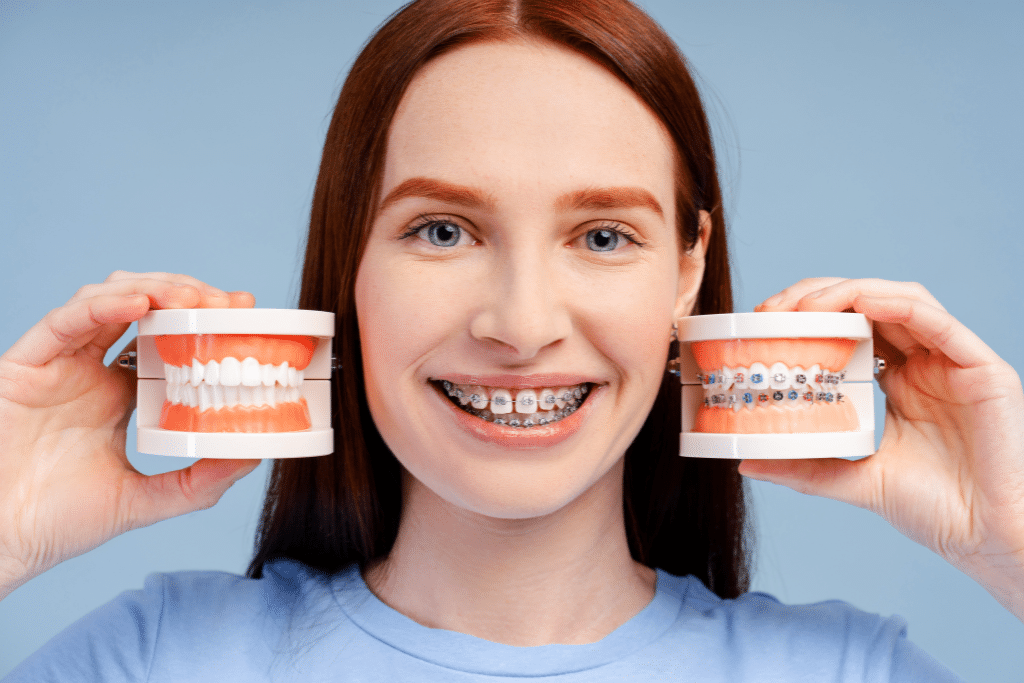
Straightening teeth as an adult comes with many questions, one of the biggest being whether Invisalign works faster than traditional metal braces. With more adults choosing to improve their smiles later in life, comparing treatment speeds has become an essential part of the decision-making process. In many cases, adults want efficient results without disrupting their daily routines.
If you’re exploring adult orthodontic treatment in Layton, understanding these differences can help you confidently choose the option that matches your goals, lifestyle, and comfort needs.
Do Adults Really Get Faster Results With Invisalign?
The short answer: sometimes yes but not always. Treatment speed depends on several factors including case complexity, bite issues, age, compliance, and tooth movement requirements.
When Invisalign May Be Faster
In many adult cases, clear aligners can move teeth more efficiently because:
- Aligners apply consistent, controlled force to specific teeth.
- Digital planning allows orthodontists to map movement precisely.
- Fewer adjustments may be needed compared to braces.
- No metal friction, which can slow movement with traditional brackets and wires.
Adults with mild to moderate crowding or spacing often see quicker results with Invisalign because the movements are straightforward and predictable.
When Braces May Be Faster
Traditional braces whether metal, lingual, or ceramic can sometimes outperform aligners for:
- Severe bite problems
- Rotated teeth
- Vertical movements
- Complex tooth repositioning
Braces allow your orthodontist to apply stronger, more detailed control, which can speed up treatment for complex cases.
Key Differences That Impact Speed
1. Case Complexity
- Simple cases: Invisalign often wins on speed.
- Complex cases: Braces still hold an advantage.
2. Compliance
Invisalign requires wearing aligners 20–22 hours a day.
If aligners aren’t worn consistently, treatment becomes slower than braces.
3. Lifestyle Fit
Adults who want:
- Discreet treatment
- Easier cleaning
- Fewer food restrictions
Often stay more consistent with Invisalign, which indirectly speeds up progress.
4. Bone Density in Adults
Adult bone is more dense than teens’, meaning tooth movement is naturally slower.
Both Invisalign and braces can work efficiently, but adult compliance often gives Invisalign a boost.
How Long Does Invisalign Take for Most Adults?
Most adult Invisalign treatments are completed in a relatively shorter timeframe when the case is mild to moderate. Braces typically require a longer overall duration, especially for more complex bite concerns or advanced tooth movements.
However every case is unique. The most accurate way to know which option will work faster for you is to schedule a consultation with a skilled orthodontist who can evaluate your teeth, bite, and treatment goals.
Want the Most Accurate Answer? Ask Yourself These Questions
- Can I wear aligners 22 hours a day?
- Do I prefer a discreet look?
- Is my case mild, moderate, or complex?
- Do I want fewer office visits?
These questions help you determine whether Invisalign may be the quicker path.
Final Thoughts: Which One Should Adults Choose?
While many adults achieve faster results with Invisalign, others may benefit from the precision and control of braces. The right choice depends entirely on your unique smile and how committed you are to the treatment process.
If you’re starting your journey with adult orthodontic treatment in Layton, the best next step is a personalized evaluation. At Cameron Orthodontics, you’ll receive a detailed assessment tailored to your goals, lifestyle, and comfort preferences so you know exactly what will work best and how fast you can expect results.
Request an appointment today and take the first step toward a confident, beautifully aligned smile!