
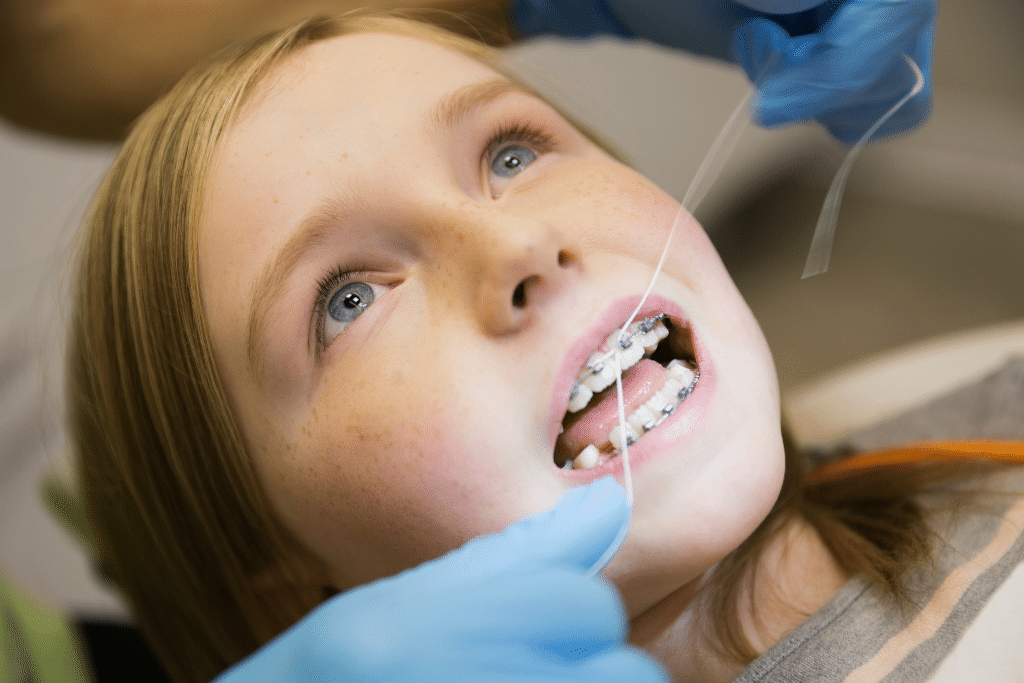
It’s one of the most common questions parents ask at their child’s checkup: Does my kid actually need braces? Maybe you’ve noticed crowding, an overbite, or your child is losing baby teeth later than their friends. Or maybe everything looks fine to you, but their dentist still recommended an orthodontic evaluation. Whatever brought you here, you’re not alone and the answer isn’t as simple as yes or no.
Every child’s smile develops differently, which is why orthodontic treatment for kids is never a one-size-fits-all decision. Orthodontists evaluate much more than whether teeth look straight, considering jaw growth, bite alignment, spacing, and the timing of permanent teeth to determine whether treatment is needed now or can safely wait. Here’s what actually goes into that decision.
The Short Answer: Not Every Child Needs Braces
Roughly 35 to 45 percent of children have teeth that are aligned well enough that orthodontic treatment isn’t necessary. The rest have some degree of misalignment, but even then, not all of it needs to be corrected with braces. Some cases resolve naturally as the jaw grows, while others are cosmetic rather than functional and remain a personal choice. However, if left untreated, certain issues can lead to problems with chewing, speech, or long-term jaw health. That’s why families considering kids orthodontic treatment in Layton benefit from an early orthodontic evaluation to determine whether treatment is needed now or if careful monitoring is the better approach.
The job of an orthodontist isn’t to put braces on every child who walks in. It’s to figure out which category your child falls into and then give you an honest recommendation.
What Orthodontists Are Actually Looking For
When an orthodontist evaluates a child, they’re looking at much more than just crooked teeth. Here’s what goes into that assessment:
Bite alignment. Overbites, underbites, crossbites, and open bites can affect how a child chews food and speaks. Left uncorrected, they can also cause uneven wear on the teeth or jaw joint problems over time.
Spacing and crowding. Crowded teeth are harder to clean, which raises the risk of cavities and gum disease. Significant gaps can shift other teeth over time.
Jaw development. Orthodontists look at how the upper and lower jaw relate to each other. Some jaw issues are much easier to address during growth spurts which is why timing matters.
Functional issues. Mouth breathing, tongue thrusting, teeth grinding, and difficulty chewing are all signs that something may need attention beyond aesthetics.
X-rays and growth stage. A panoramic X-ray reveals teeth that haven’t come in yet, root development, and whether there’s enough space for adult teeth. Growth plates visible on the X-ray also help orthodontists decide whether it’s better to act now or wait.
The Age-7 Rule Explained
The American Association of Orthodontists recommends that children have their first orthodontic screening by age 7. This confuses a lot of parents. Your child still has baby teeth at 7. Why so early?
By age 7, the first permanent molars have typically come in, establishing the back bite. An orthodontist can evaluate the relationship between the jaws and identify any patterns that might become problems later. Most children evaluated at this age don’t need treatment right away. The goal is early detection, not early intervention for everyone.
For families in Davis County and the surrounding areas, starting this evaluation on time matters. Growth windows are real — there are stages in a child’s development when certain corrections are far more efficient to make. Missing that window doesn’t mean treatment becomes impossible, but it can make it longer and more complex.
Two-Phase Treatment vs. Waiting Until Teenage Years
You may have heard the term “Phase 1” treatment. This refers to early orthodontic work done while a child still has baby teeth and the jaw is actively growing usually between ages 7 and 10. Phase 2 is the more traditional braces phase that happens once most adult teeth have come in, typically around ages 11 to 14.
Not every child needs Phase 1 treatment. But for children with significant jaw discrepancies, severe crowding, crossbites, or habits like thumb-sucking that are affecting jaw development, early treatment can make a meaningful difference. It can reduce the need for tooth extractions later, shorten Phase 2 treatment time, and sometimes avoid more invasive procedures down the road.
If your child’s orthodontist recommends a wait-and-watch approach instead, that’s not neglect it’s often the most evidence-based decision they can make.
Kids Orthodontic Treatment in Layton: What the Local Landscape Looks Like
Families in Layton and the broader Davis County area have access to excellent orthodontic care, and awareness is growing. Schools in the area increasingly recommend orthodontic screenings as part of routine health checks, and local pediatric dentists are well-connected with orthodontic specialists for referrals.
One thing we hear often from Layton parents is that they’re not sure whether to go through their pediatric dentist or go straight to an orthodontist. Either path works but a dedicated orthodontist brings specialty training that goes beyond what a general dentist evaluates. For kids orthodontic treatment in Layton, getting a second opinion from a board-certified orthodontist is always a reasonable step if you’re uncertain.
The communities around Layton including Syracuse, Kaysville, Clearfield, and Farmington share similar demographics: active families, kids involved in sports and school activities, and parents who want to make informed decisions without unnecessary procedures. That’s exactly the kind of conversation we’re built for.
Orthodontic Treatment for Kids: What Modern Options Look Like
Gone are the days when braces meant a mouthful of metal and nothing else. Orthodontic treatment for kids today includes traditional metal braces, ceramic (tooth-colored) braces, and in some cases, clear aligner systems designed specifically for younger patients. The right option depends on your child’s specific needs, age, compliance level, and the complexity of their case.
Metal braces remain the most reliable option for complex corrections and are often the right call for younger children who may not be disciplined enough to wear removable aligners consistently. Ceramic braces offer a more discreet look with similar effectiveness. Clear aligners work well for older teens with mild to moderate alignment issues.
For kids orthodontic treatment in Layton, the best choice is always the one your orthodontist recommends based on your child’s clinical picture, not the one that looks best in an ad.
Ready to Find Out Where Your Child Stands?
The best thing you can do for your child’s smile is get a clear picture from a professional, not guesswork based on what you can see in the mirror. At Cameron Orthodontics, we offer comprehensive orthodontic evaluations for children of all ages. Our team works with families throughout Layton and Davis County to create honest, personalized treatment plans that match each child’s needs and each family’s priorities.
If your child is around age 7 or older and hasn’t had an orthodontic screening, now is a great time. And if you’ve already been told they might need treatment and want a second opinion, we welcome that too.
Book your consultation today at Cameron Orthodontics.
Cameron Orthodontics serves families in Layton, Syracuse, Kaysville, Clearfield, Farmington, and surrounding Davis County communities.