
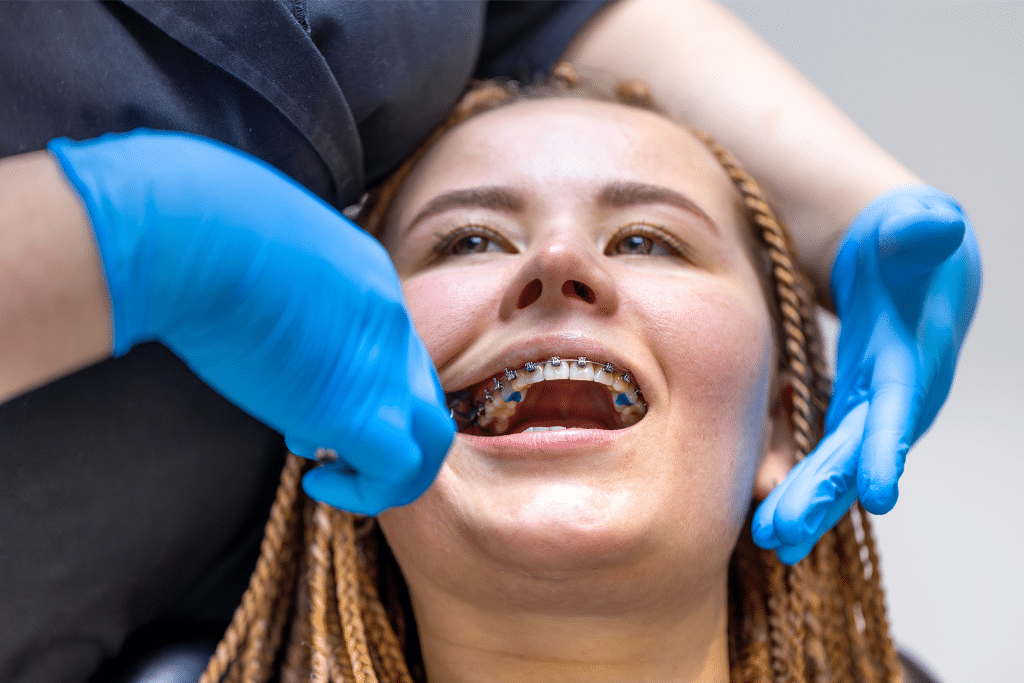
You finished your braces. You got that final scan. Your orthodontist handed you a retainer and sent you home with a smile you’d waited years for. So why, a few months or years later, does something look… off? Maybe a front tooth has rotated slightly. Maybe that gap you hated as a kid is quietly creeping back.
If you’re nodding right now, you’re not alone and you’re not imagining it. Orthodontic relapse is one of the most common concerns patients bring to their orthodontist, and with expert orthodontic care, it’s entirely treatable. Here’s what’s actually happening inside your mouth, and what you can do about it.
If you’ve been searching for an orthodontist near me in Layton, don’t wait until a small shift becomes a bigger concern. Early evaluation often means simpler treatment, whether that’s a new retainer, clear aligners, or another customized solution. The sooner relapse is addressed, the easier it is to protect the smile you’ve already worked so hard to achieve.
Why Do Teeth Move After Braces?
Your teeth are not anchored like fence posts. They sit in a living system of bone, gum tissue, and tiny periodontal ligaments that are constantly responding to pressure. Braces work by applying sustained, controlled force to shift teeth into new positions but that process doesn’t end the day your brackets come off.
The bone around your teeth needs time to fully remodel and stabilize around the new positions. This period, often called the “retention phase,” is just as important as the active treatment itself. Skip it or cut corners and your teeth will gravitate back toward where they came from.
Several factors contribute to relapse:
Natural aging and jaw changes. The human jaw continues to develop and shift well into your late twenties. Lower front teeth, in particular, have a strong tendency to crowd as you age with or without previous orthodontic treatment.
Gum and bone memory. The fibers in your gum tissue (called the periodontal ligament) have a kind of elastic memory. After braces, they pull teeth back toward their original positions, especially in the first few months after treatment.
Inconsistent retainer wear. This is the big one. Retainers are not optional accessories. They’re the only thing standing between your new smile and your old one. Many patients wear their retainer diligently at first, then gradually stop and that’s when relapse begins.
Wisdom teeth. While research is mixed on whether wisdom teeth directly cause crowding, their eruption can contribute to shifting particularly in the lower arch.
What Does Orthodontic Relapse Actually Look Like?
Relapse doesn’t always announce itself dramatically. It usually starts small: a slight rotation of one tooth, mild crowding in the lower front, or a gap returning between upper teeth. Some patients don’t notice until they look at old photos. Others feel it first: a tooth that used to feel smooth against the tongue now has an edge.
In more advanced cases, a significant amount of the original correction may be lost. The good news is that most relapses are very fixable and the sooner it’s addressed, the easier the correction.
How Orthodontists Treat Relapse
If you’ve experienced shifting after braces, the first step is a consultation with a qualified orthodontist to assess the extent of the movement. Treatment options vary depending on how much has changed.
Updated or replacement retainers. If the shifting is minor and caught early, a new fitted retainer sometimes used as a mild corrective appliance can guide teeth back into alignment.
Clear aligner therapy. For moderate relapse, clear aligners like Invisalign are often the most convenient option. They’re discreet, removable, and well-suited for adults who’ve already been through braces once and want a low-profile solution.
Fixed braces (traditional or ceramic). In cases where significant movement has occurred, a full course of braces may be necessary to fully restore alignment.
Lingual retainers. For patients with a history of relapse, a bonded wire retainer attached to the back of the teeth can provide long-term stability without relying on patient compliance.
The right option depends on your specific situation which is exactly why a professional evaluation matters before deciding anything.
Preventing Relapse Before It Starts
The most effective treatment for relapse is prevention. After active orthodontic treatment ends, most orthodontists recommend wearing your retainer full-time for at least several months, then transitioning to nightly wear indefinitely. Yes, indefinitely. Retainer wear is a lifelong commitment for most people, though it becomes easier over time.
If your retainer breaks, warps, or gets lost, don’t wait. Every week without it is a week your teeth can shift. Call your orthodontist promptly and get a replacement made.
Orthodontic Care in Layton, UT
Here in northern Utah, families in Layton, Kaysville, Clearfield, and the surrounding Davis County communities know that access to quality dental care matters. Layton has grown significantly over the past decade, and with that growth has come greater access to specialized healthcare including orthodontics.
Whether you had braces as a teenager and are now shifting in your thirties, or you’re looking to start treatment for the first time, finding an orthodontist in Layton who understands your long-term goals is the right first step. A well-qualified practice doesn’t just straighten teeth it creates treatment plans designed to hold results for life.
If you’re searching for an orthodontist near me in Layton, you’ll want to look for a provider who emphasizes retention planning from day one, not as an afterthought at the end of treatment. That long-term thinking is what separates a great outcome from one that slowly unravels.
Get Your Smile Back on Track at Cameron Smiles
At Cameron Orthodontics, we understand that orthodontic treatment is a long-term investment and one worth protecting. Whether you’re experiencing relapse after previous braces, exploring options for a new patient, or simply want a professional assessment of how your smile is holding up, our team is here to help.
We provide expert orthodontic care tailored to each patient’s goals, timeline, and lifestyle. Serving the Layton community and surrounding Davis County areas, we combine the latest technology with a genuinely people-first approach to treatment.
If you’re ready to take the next step, we’d love to meet you. Book your consultation today at Cameron Orthodontics today and find out what’s possible for your smile because you deserve results that last.
Cameron Smiles proudly serves patients as a trusted orthodontist in Layton UT, as well as families throughout Kaysville, Clearfield, Syracuse, and the greater Davis County area.