
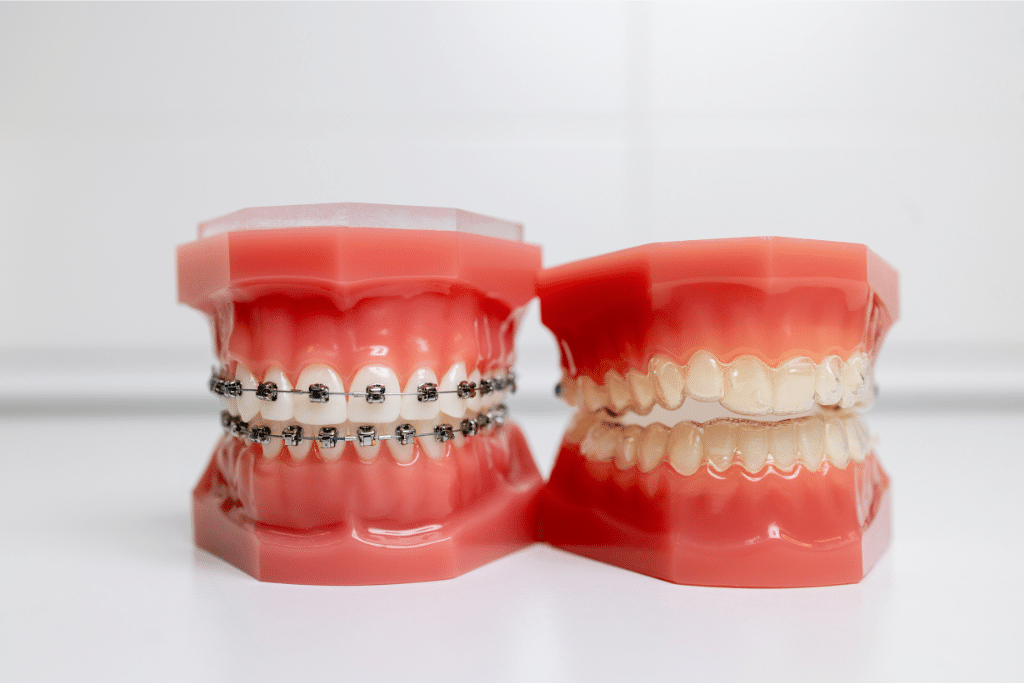
If you’ve been driving down Church Street past Ellison Park or grabbing coffee near Layton Hills Mall and wondering whether your teenager needs metal brackets or clear aligners, you’re not alone. Every week, parents and adults from Kaysville, West Point, Syracuse, and Clearfield ask the same question: braces or Invisalign? The honest answer depends on the bite problem you’re dealing with, not just personal preference.
Here in Davis County, where kids play travel soccer, snowboard at Snowbasin on weekends, and juggle band practice with homework, the right orthodontic choice needs to fit real life, not just fix teeth. Before we cover Braces in Layton and how they compare to Invisalign, know that both options can straighten teeth beautifully. The difference shows up in how each handles specific bite issues. Learn more about braces and how they’ve evolved from the bulky metal you may remember from childhood.
Not sure if what you’re seeing at home is actually a big problem worth addressing? A few common signs worth watching for include:
- Teeth that don’t meet evenly when your mouth is closed
- Frequent jaw clicking, popping, or soreness after meals
- Chewing on one side of the mouth more than the other
- Speech that sounds slightly off due to tooth positioning
- Noticeable crowding, gaps, or a jaw that shifts to one side when biting down
If any of these sound familiar, it’s worth having a professional take a closer look before deciding between braces and Invisalign.
Understanding the Bite Problems That Matter
Orthodontists talk about “malocclusion,” a fancy word for a bite that doesn’t line up correctly. The most common types we see in our Layton and West Point offices include overbites, underbites, crossbites, open bites, and severe crowding. Each behaves differently depending on the appliance used to correct it.
Overbites and Underbites
Traditional braces generally win here, especially for moderate to severe cases. Metal or ceramic brackets connected by wires give the orthodontist precise control over both the crown and root of each tooth, which matters a lot when jaw alignment is involved. Invisalign has made real progress with attachments and elastics, but for a bite that’s significantly off, braces still tend to deliver more predictable, faster results.
Crossbites
This is where a top tooth sits behind a bottom tooth instead of in front of it. Braces, sometimes paired with expanders for younger patients, are often the go-to solution because they can apply steady, targeted pressure. Invisalign can correct mild crossbites, particularly in adults with fully developed jaws, but complex cases usually respond better to fixed appliances.
Open Bites
An open bite, where the front teeth don’t touch when the mouth is closed, can be trickier. Both braces and Invisalign can treat it, but Invisalign actually has an edge in certain cases because it can be designed with precision bite ramps that discourage tongue thrusting habits, which is often the root cause in kids and teens.
Severe Crowding or Spacing
When teeth are significantly overlapped or there are large gaps to close, braces typically move things faster and with more control. Invisalign works well for mild to moderate crowding, but for a mouth that looks like it’s playing bumper cars, braces are usually the more efficient choice.
Mild Cosmetic Adjustments
If your bite is essentially fine and you’re mainly looking to close small gaps or straighten a few crooked teeth, Invisalign is often the better fit. It’s discreet, removable for meals and photos, and popular with working professionals around Hill Air Force Base and teens who don’t want a mouth full of metal for their senior pictures.
Why Local Lifestyle Matters in This Decision
Layton families are busy. Between Friday night football at Layton High, ski season at nearby resorts, and long commutes on I-15 to Salt Lake City, treatment needs to fit your schedule, not the other way around. Braces require fewer daily decisions since they’re fixed in place, which suits younger kids who might lose or forget aligner trays. Invisalign appeals to older teens and adults who want flexibility for sports, band instruments, or job interviews, and who can be trusted to wear trays twenty-two hours a day.
Our Utah winters also play a role. Cold weather makes some patients more sensitive to the initial discomfort of new braces, while Invisalign trays are generally gentler on soft tissue. It’s a small factor, but one we discuss with patients who mention sensitivity during consultations.
Getting a Real Answer for Your Bite
No blog post, including this one, can tell you exactly which option is right for your mouth. Bite correction depends on x-rays, models, and a hands-on exam. That’s why anyone researching Braces in Layton should start with an actual consultation rather than guessing based on what a friend or sibling had done. What worked for your neighbor’s overbite may not be the right call for your child’s crossbite.
Ready for Your Best Smile Yet?
Whether your bite calls for traditional brackets or clear aligners, the team at Cameron Orthodontics has helped families throughout Layton, West Point, and greater Davis County get results that last. We’ll take a close look at your bite, walk you through your options honestly, and build a plan that fits your life, not just your teeth.
Book your consultation with Cameron Orthodontics today and take the first step toward a smile you’ll actually want to show off.