
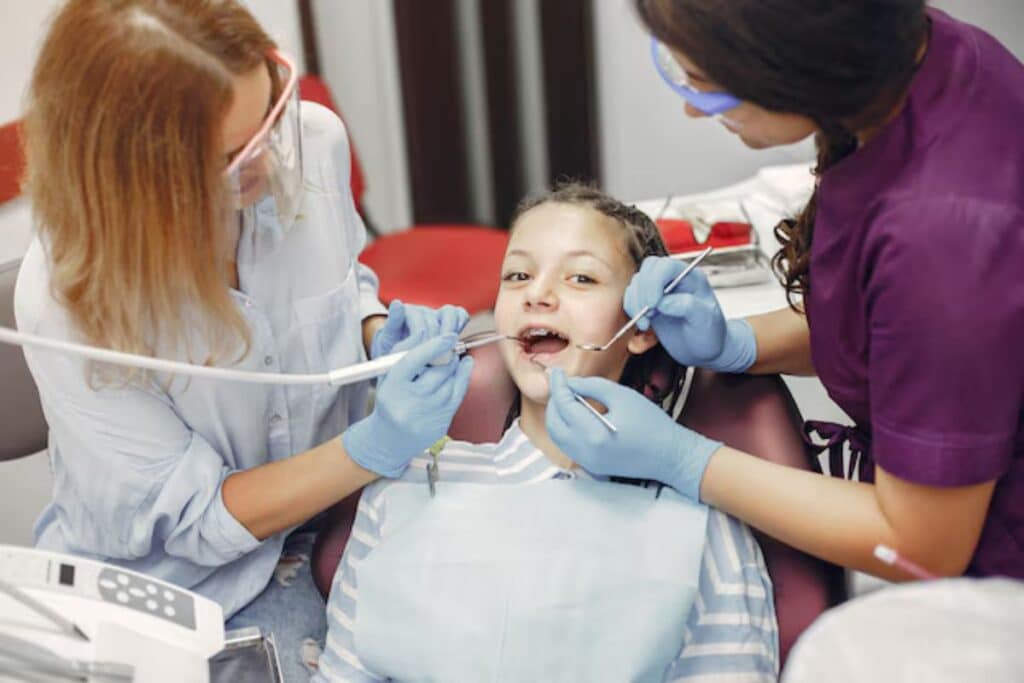
Orthodontic issues in children are not uncommon, and addressing these problems early can lead to better dental health and aesthetics in adulthood. Layton, with its top-notch dental facilities and experienced orthodontists, provides comprehensive treatments to correct these issues. Here are some of the most common orthodontic problems in children and the available treatments in Layton.
1. Crowded Teeth
Issue: Crowded teeth occur when there isn’t enough space in the mouth for permanent teeth to erupt properly. This can lead to misaligned teeth and difficulty in maintaining oral hygiene.
Treatment: Early intervention with braces or Invisalign can help realign the teeth. In some cases, tooth extraction might be necessary to create space for proper alignment. Palatal expanders are also used to widen the upper jaw and provide more room for the teeth.
2. Overbite
Issue: An overbite is when the upper front teeth overlap significantly over the lower front teeth. This can cause issues with biting, chewing, and even speaking.
Treatment: Braces are commonly used to correct an overbite by gradually moving the teeth into their proper position. In severe cases, orthodontists in Layton may recommend the use of headgear or other appliances to help align the jaw.
3. Underbite
Issue: An underbite is when the lower front teeth protrude beyond the upper front teeth. This condition can affect the child’s ability to chew and speak properly and can also lead to jaw pain.
Treatment: Early treatment with braces or aligners is essential. In some cases, orthodontic surgery may be required to reposition the jaw. Orthodontists in Layton often use growth modification devices in younger children to guide the jaw’s growth in the right direction.
4. Crossbite
Issue: A crossbite occurs when the upper teeth bite inside the lower teeth. This can happen on one side of the mouth or both and can lead to jaw misalignment and uneven tooth wear.
Treatment: Palatal expanders are commonly used to widen the upper jaw and correct the crossbite. Braces or clear aligners can then be used to fine-tune the alignment of the teeth.
5. Open Bite
Issue: An open bite is when there is a gap between the upper and lower front teeth when the back teeth are closed. This can be caused by habits such as thumb sucking or tongue thrusting.
Treatment: Orthodontic appliances such as braces or aligners are used to close the gap. Behavioral therapy to stop habits like thumb sucking may also be recommended. In some cases, jaw surgery might be necessary.
6. Spacing Issues
Issue: Spacing issues refer to gaps or spaces between the teeth, which can be caused by missing teeth or teeth that are too small for the jaw.
Treatment: Orthodontic treatment with braces or aligners can close these gaps. If teeth are missing, dental implants or bridges might be recommended to fill the spaces.
7. Misaligned Jaw
Issue: A misaligned jaw, or malocclusion, can cause difficulties in chewing, speaking, and can lead to facial asymmetry.
Treatment: Growth modification devices are often used in children to guide the jaw’s development. Braces or other orthodontic appliances can help align the teeth and jaw. In severe cases, surgical intervention might be required.
Why Early Treatment is Crucial
Early orthodontic evaluation, typically around the age of seven, is crucial for identifying and addressing these issues before they become more severe. Early treatment can guide the growth of the jaw, regulate the width of the dental arches, and reduce the risk of more serious issues developing.
Conclusion
Orthodontic issues in children are common, but with early intervention and the expertise available in Layton, these problems can be effectively treated. Parents should ensure regular dental check-ups for their children and consult with an orthodontist if any signs of misalignment or other issues arise. With proper care, children can achieve a healthy, beautiful smile that lasts a lifetime.